SIRATYST (Stuff I Read and Thought You Should Too) --
“To ravage, to slaughter, to usurp under false titles, they call empire; and where they make a desert, they call it peace.”
(Calgacus, as quoted by Tacitus, Agricola 30-31)"
Seven years ago today, on the birthday of Martin Luther King Jr., Dr. Claudia Fegan delivered the following remarks to the Louisville (Ky.) Urban League. This was after President Obama signed the Affordable Care Act but before most of it was implemented. Today we still see blatant racism, voter suppression, intolerable inequities in income and wealth, and many other social injustices including the denial of affordable health care for far too many of our people. Thus it is appropriate that we take another timely look at Martin Luther King's message delivered through Claudia Fegan's heartfelt remarks.--Dr. Don McCanne
January 15, 2011
Beyond the flawed Obama health care reform
‘The time is always right to do what’s right’: Dr. King
By Claudia Fegan, M.D.
It is indeed an honor and a privilege for me to stand here today celebrating the life and work of Dr. Martin Luther King Jr.
We learned much from Dr. King, even though he was taken from us too soon. He taught us that “the time is always right to do what’s right.”
As we stand here today, there are 50 million Americans who are uninsured. African Americans are represented disproportionately among the uninsured. We represent only 12 percent of the population, yet we are 20 percent of the uninsured. This is our issue.
As a result of not having insurance, we have decreased access to the preventive services that would allow us to live longer, healthier, richer lives. We pay a tremendous price for this.
Our infant mortality rate is about 2.5 times that of whites, our rates of death from heart disease and cancer are 1.5 times that of whites, our rate of death from diabetes is almost 2.5 times that of whites and our rate of death from HIV is 5 times that of whites. African American patients on dialysis are less likely to be referred for evaluation for kidney transplant and therefore, not surprisingly, we are far less likely to get a kidney transplant. This is our issue.
The Institute of Medicine in its 2004 study on “The Consequences of Uninsurance” estimated over 18,000 people a year die as a result of not having access to health insurance. Uninsured adults receive fewer and less timely preventive and screening services; uninsured cancer patients die sooner due to delayed diagnosis; the uninsured receive less chronic illness care, poorer hospital care and are more likely to die in the hospital; and the risk of premature death among uninsured Americans is 25 percent higher than among Americans with health insurance.
This is our reality, the reality of health care for African Americans in this country. We will never get more until we demand more. This is our issue.
The fierce urgency of now
Since 1986, Physicians for a National Health Program has been trying to convince physicians, patients and politicians that if we tossed out the private insurance industry and made the government the single payer for health care in this country, we could provide coverage for everyone with same money we are using now to cover only two-thirds of the country poorly.
I have a patient who is 63 years old. Ms. Lenoir has worked all her life, she is active in her church, she cares for her elderly mother and together she and her husband have raised their children to be self-sufficient members of society. Ms. Lenoir does not have health insurance because her employer has never provided that benefit.
The problem is Ms. Lenoir needs a new hip. After more than 20 years of arthritis in her hip, the joint is destroyed. She has bone grinding on bone. No amount of anti-inflammatory medication will relieve her pain.
I sent Ms. Lenoir to a pain specialist who injected the joint to provide her with temporary relief and who then called me and said, “this woman needs a new hip.” I told her, I know that, but have you got one you can give her? No one will pay for a hip for her until she turns 65 and Medicare will provide her with coverage.
I wish you could look into this woman’s eyes each time she comes to see me and feel her pain. Will the legislation passed last year provide her with a new hip before she turns 65 in 2013? No, probably not. This is our issue.
In the book “The Heart of Power,” David Blumenthal chronicles the efforts of presidents from Franklin Roosevelt through George W. Bush to achieve access to health care for the American public. “Major health reform is virtually impossible: difficult to understand, swarming with interests, powered by money, and resonating with popular anxiety,” he writes.
The congressional veteran and co-chair of the 9/11 Commission, Lee Hamilton, said, “Health care is so difficult because Congress is an incremental body and health care is a non-incremental issue.”
What Barack Obama did with the passage of the Patient Protection and Affordable Care Act (ACA) was nothing short of miraculous, but it was not enough and it will not solve our problems.
Going forward there will not be a fair, open or honest discourse about this legislation. It is a fact that ACA will do nothing to control costs. That is the major flaw of the legislation. Why are we still talking about single payer? Because single payer will address the issues of cost, access and quality.
Being right is not enough
Dr. King taught us being right is not enough. We have to win the hearts of the American public. We didn’t lose the war to gain access to health care for all Americans. We got battered in an ugly skirmish, but we’re not done.
It is time to change our tactics. The opportunity for change is still ahead of us. More recent studies have taught us that actually 45,000 people die each year as a result of not having health insurance, which means 180,000 more people will die before the full implementation the ACA. If everything goes exactly as planned, there will still be at least 23 million uninsured once all the changes have taken effect. This is our issue.
Camille Rucks was a security guard for a small company on the South Side of Chicago. In the spring of 2008 she developed breast cancer. She received outstanding care at the University of Chicago and did well. However, in November 2008, which we now know was the beginning of the recession, when her company began to struggle, she was laid off. She thought she was targeted because she had been out sick so much when she was receiving chemo, but it doesn’t matter.
In January 2009, when she had some blood-streaked sputum, her primary care physician (PCP) ordered a chest X-ray that showed a spot that raised the question of maybe her cancer had returned. Her oncologist told her she couldn’t see her because she was no longer insured. Her surgeon never returned her phone calls.
Her PCP called me because she was not able to get the necessary tests done for Camille because she was no longer insured. I told her PCP to have Camille come see me the next day.
I said, sure, of course, this is what we do; we’re the County Hospital. In less than a week she had a CT of her chest, and within two weeks she had been seen by pulmonary and oncology. She did have metastatic cancer and we took care of her.
I wish I could tell you this story had a happy ending, but it doesn’t. Camille died last year, but she told me she had no regrets. We treated her with dignity and respect.
My question is this: Who doesn’t deserve dignity and respect? Why should you have to pass a wallet biopsy before a health care provider determines she can talk to you, order a test, figure out what is wrong or decide how to treat you? This is our issue.
Affordable Care Act will not work
The Affordable Care Act has not made health care a right. Access to care is a profit center controlled by the insurance industry. We pay them to limit access to care. We spend more per capita on health care than any country in the world -- more than $8,000 per person -- and yet we are ranked only 36th in the world by the World Health Organization for the care we provide.
Under the ACA, everyone will be required to carry or purchase private insurance. For those who can’t afford it, we’re requiring states to either cover them under Medicaid or to provide supplements so they can purchase private insurance. This is an industry that has a history of profiteering by retroactively denying coverage to people with illnesses. So now we’re requiring everyone to buy coverage, and yes, we have told the insurance companies they can’t deny coverage to those with illnesses.
My question is why can’t we just pay for the care without having to go through the insurance industry? They are not to be trusted. Ask the state of Massachusetts how it has worked out for them with mandating insurance coverage and paying for those who can’t afford it. The cost of premiums has gone up so high so fast in the first year the governor met with the major companies to request they hold off on their premium increases because the costs had exceeded three times the original projections. The state now teeters on insolvency. This is our issue.
We spend enough money on health care in this country. We just let too many people who aren’t involved in providing care take profit from it.
This is about justice. Health care should be a right to which everyone is entitled. Remember we live in the wealthiest country in the world. We spend more on health care than any other country. It is time we got our money’s worth. It is time we got the health care we deserve, not the care the insurance industry is willing to let us have. It is time we made health care a right and not a privilege.
We have to speak up. We have to speak loudly. We have to make our voices heard.
The Affordable Care Act is an opportunity: It is not going to work!
A simpler and just solution
We have to remind the people -- there is still a simpler, easier solution. People want to know, they have questions. They will ask, is this the answer? Will this work? Will this solve the problem?
Multinational Big Pharma charges the American public the highest pharmaceutical prices in the world, while it sells the very same drugs all over the world at prices one-half, one-third or even one-tenth of the price they charge in the United States. They do this because in the rest of the industrialized world, there is legislation that limits profits for medications, while the U.S. allows these companies to charge whatever the market will bear. The Affordable Care Act does not address this issue. This is our issue.
Dr. King said, “When people get caught up with that which is right and they are willing to sacrifice for it, there is no stopping point short of victory.” The Affordable Care Act was not victory. We now have a House of Representatives that thinks the American public will be appeased by political theater instead of substance.
What the American public wants is not so different from what African Americans want and deserve. We want guaranteed access to care, freedom of choice of provider, quality health care and two words you don’t hear in association with health care very much anymore: trust and respect.
We know it can be done because every other industrialized country in the world has figured how to do this. Most of them spend less than half what we do and they have better outcomes with more satisfaction.
It is not so complicated what we want: we want a health care system that takes everybody in and leaves nobody out. It is only the phony solutions they are attempting to confuse us with, that are complicated, just so we don’t notice they fail to expand coverage to those who need it and deserve it. That’s why this will be the civil rights struggle of the 21st century, and this is our issue.
I understand people are reluctant to criticize the ACA because our president is under assault from the right and he needs our support. I think Dr. King would tell us it is important to tell the truth: “The time is always right to do what’s right.”
When I think about this struggle I think about a poem my father taught me as a child. It was written by Langston Hughes and is called “Mother to Son.”
Well, son, I’ll tell you: Life for me ain’t been no crystal stair.
It’s had tacks in it, And splinters, And boards torn up,
And places with no carpet on the floor -- Bare.
But all the time I’se been a-climbin’ on, And reachin’ landin’s,
And turnin’ corners, And sometimes goin’ in the dark
Where there ain’t been no light.
So, boy, don’t you turn back. Don’t you set down on the steps.
’Cause you finds it’s kinder hard. Don’t you fall now --
For I’se still goin’, honey, I’se still climbin’,
And life for me ain’t been no crystal stair.
The issue of guaranteeing access to care for everyone is an issue of social justice. Battles for social justice are never over, because there will always be reactionary forces waiting in the wings to turn back the clock. There are no easy solutions. We have to be willing to fight for what we believe in and keep fighting.
The night before he was assassinated Martin Luther King said: “Let us stand with greater determination. And let us move in these powerful days, these days of challenge to make America what it ought to be. We have an opportunity to make America a better nation.”
I hope you will join me in saying what we expect from any health care program any politician will offer us: Everybody in, Nobody out! Everybody in, Nobody out!
Thank you.
Claudia Fegan, M.D., is chief medical officer at the Cook County Health and Hospitals System and past president of Physicians for a National Health Program.
Tweet
ORIGINALLY AT:
https://www.theroot.com/erica-garner-i-m-in-this-fight-forever-1821674010?utm_source=theroot_twitter&utm_medium=socialflow
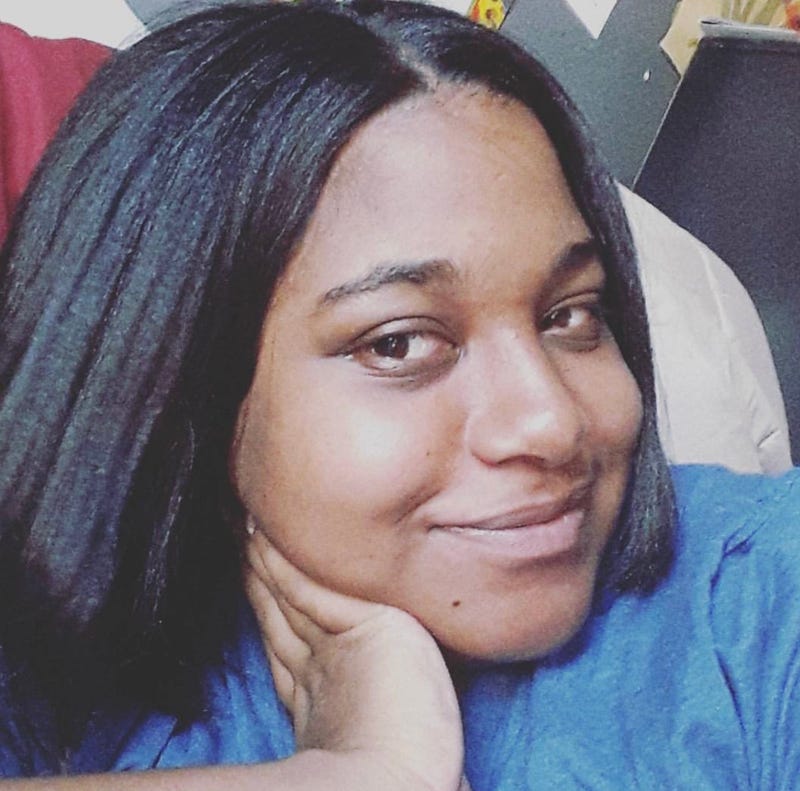
Erica Garner (Instagram)
When I met Erica Garner in 2016 at the Drug Policy Alliance Conference in New York City, it was not a meeting of activist and journalist; it was a chance meeting between two women who were desperately missing their fathers and determined that they would never be forgotten, that their legacies would endure.
00:00
00:00
Her eyes were tired and filled with that consuming grief that never goes away. The kind of grief that shocks the nervous system and sinks deep into your bone marrow until it becomes a part of you. Still, she smiled. She put one foot in front of the other and she chose life; she chose to live for her father and not die with him. She chose her daughter, Alyssa.
Erica chose us. Time and time again, she chose us.
I envision her now, voice hoarse and cracking, fist in the air, not giving a fuck about who didn’t like what she had to say or how she chose to say it.
I see her lying down in the same spot, on the same Staten Island N.Y. street corner, where NYPD officer Daniel Pantaleo choked her father to death in broad daylight simply because he could. She was joined by other protesters in a “die-in” as many people walked by as if she didn’t exist.
I see her calling out ABC for their farce of a townhall on race after the network walked back a promise that she would be allowed to ask President Barack Obama a question.
I see her refusing to be a tokenized voice of a “resistance” constricted and diluted for white liberals’ comfort. During the 2016 presidential election cycle, Erica stood, unshakable, as an emerging, powerful voice of the radical black left. When the majority of black women voters supported Hillary Clinton—many of them calling anyone not doing the same either politically unsophisticated, dangerous, or “privileged” enough to make decisions rooted in morality—Erica was clear that her decision not to support Clinton was rooted in the survival of her family, her community, and justice for her father.
She was the embodiment of unbought and unbossed.
I see her calling out NYC Mayor Bill de Blasio for refusing to support the release of Pantaleo’s disciplinary record. This killer cop not only remains on the city’s payroll, he has received multiple pay raises. Bill de Blasio, however, would rather share his superficial condolences on social media in the wake of Erica’s death, instead of pursuing the justice that would have made her life easier.
Erica was a revolutionary. She knew the magnitude of what she was taking on and she jumped into the movement—feet planted, back straight, head high, warrior heart beating. She didn’t shy away from calling out the Democratic Party for being complicit architects of mass incarceration, nor was she silent about the community occupations that led to her father’s state-sanctioned killing.
Erica Garner was about her father’s business.
To hear her speak about respectability politics, broken-windows policing and the war on drugs, was to see a young black woman fully aware that her father had a target on his back before he ever stepped foot on that corner and dared to navigate the world as a free black man.
She did not seek the spotlight for herself; she snatched the glaring flashlights of the police state, those lights trained on black, brown, and indigenous communities, those lights that relentlessly targeted her father, and she turned them right back on their cowardly faces.
I do not know if she was unafraid, but she was brave.
Three weeks ago, in an interview with Benjamin Dixon, Erica talked about Venida Browder, Kalief Browder’s mother, who died last year after suffering a heart attack. She also shared that the white supremacist system that she was going up against was trying to kill her, too.
“[Venida Browder] died of a broken heart. She had heart problems because she kept on fighting for her son. Like, I’m struggling right now, with the stress and everything, ‘cause this thing, it beats you down. The system beats you down until you can’t win...I felt the same pain that my father felt on that day when he was screaming, ‘I can’t breathe.’ When he was saying that he was tired of being harassed, tired of being arrested and his money stolen.” — Erica Garner
That’s what this white supremacist, heteropatriarchal, capitalist, imperialist, genocidal system does. It tries to break you into tiny pieces until you don’t recognize yourself anymore. It steals fathers away from daughters and mothers away from their children. It etches trauma into the walls of your chest cavity until your heart just can’t take it anymore.
Erica gave birth to her second child in August—her son Eric III, named in honor of his grandfather. It was then that doctors discovered that she had an enlarged heart, but she refused to stop fighting for justice. Despite how dangerous pregnancy and the postpartum period is for black women, how potentially fatal, she kept going.
“I warned her everyday, you have to slow down, you have to relax and slow down,” her mother Esaw Garner-Snipes said.
But how could she?
It would have been a revolutionary act for Erica to focus on her health in a world that demands that black women bear the burdens until we’re buried in the ground. “It’s a marathon, not a sprint,” that’s what movement elders tell us. But, sometimes, the systems of oppression, neglect, violence, and exploitation break us down until we feel we don’t have a choice. We find ourselves carrying so much pain, suffering so much loss, and holding so much rage, that practicing self-care feels impossible without justice. Sometimes, there can be no peace within without it.
That’s how white supremacy kills—slowly and quickly.
The police state that killed Eric Garner; the killer who choked the breath from the body of Erica’s “Superman;” the mayor who protected that killer—and the police department that keeps him gainfully employed to kill again—not only denied Erica justice, they actively caused her harm. Just as the NYPD lynched her father, she struggled against the noose of white supremacy tightening around her throat and the boots of the state on her back.
She lived with the eyes of the NYPD following her every move. She fought without ceasing for her father, for her children, for her people, for a world in which the humanity of her people was unassailable.
She cried freedom every day of her life and she did not deserve this. Her children don’t deserve this. No family should experience this much soul-scarring pain and loss. It ain’t fair that, at 27-years old, she will be called a martyr when what she lived to be called was mama. State violence intruded into her life, into her family’s life, in such a vicious, brutal way that the horror is almost unspeakable.
She couldn’t breathe.
“I’m not giving up and this is the fight. I’m in this fight forever,” Erica told Dixon. “No matter how long it takes, we deserve justice and I want justice for other people. And I want other families to know, it’s hard, but you gotta keep going. You gotta keep the name out there. People will forget.”
Erica Garner lying down in the same spot on the same Staten Island, N.Y. corner where NYPD officer Daniel Pantaleo killed her father Eric Garner. (Getty Images)
Know this, Erica Garner—mother, sister, aunt, friend, daughter, comrade, truth-teller, light-bringer, freedom-fighter: You shook the world and we will always say your father’s name.
Eric. Garner.
Thank you for being radical, revolutionary, black love in action. Thank you for being brave. Thank you for being loud and unapologetic and unwavering. Thank you for imagining another way of being in the world, for capturing an elusive vision of black freedom and never letting it go. Thank you for teaching us and demanding more from us.
Thank you for sharing that quiet moment with me—both daughters, both mothers, connecting over struggling to find joy in a cruel world without our fathers.
We love you. We continue this fight for you. We will always say your name.
We can still hope for a medical miracle, but ... Erica is a fighter, a tireless struggler for justice for her Dad and all ordinary people. Fight on, Erica!
The gates outside the LNG work site were blocked from 6 am until about 9 am, when the workers were told to leave the site for the day. One day lost and hopefully many more to keep this monstrous project from endangering Tacoma and the globe.
Cynthia Linet, free after Not Guilty verdict at her trial for locking down at the LNG site!*