SIRATYST (Stuff I Read and Thought You Should Too) --
“To ravage, to slaughter, to usurp under false titles, they call empire; and where they make a desert, they call it peace.”
(Calgacus, as quoted by Tacitus, Agricola 30-31)"
War, whether with Iran or China, provides a means for directing the contradictions of US capitalism outward in an explosion of military violence, while serving as a justification for the forcible imposition of “national unity” at home.
But as he wrote those words, studies to supply such data were in the
works. Chief among them was an initiative to compare women who had
abortions with those who wanted them, but were turned away from clinics
for various reasons, including state restrictions or a lack of doctor
availability. Called the Turnaway Study, the effort followed about 1,000
women in the United States for five years after they sought abortions.
The women were similar in terms of physical, mental and economic
well-being initially, but diverged over time1.
In
more than 40 reports published in peer-reviewed scientific journals,
researchers analysed what happened to the women, adjusting for potential
confounding factors such as age. The overall finding was that, on
average, receiving an abortion didn’t harm women’s mental or physical
health, but being denied an abortion resulted in some negative financial
and health outcomes.
“The science clearly shows that abortion is
incredibly common, and it is important to women living full lives,” says
Diana Greene Foster, leader of the Turnaway Study and a
reproductive-health researcher at the University of California, San
Francisco. Recent years have seen the Turnaway and other studies
referenced in abortion court cases. For example, judges have cited a 2018 National Academies of Sciences, Engineering, and Medicine report
finding that abortion is safe. This and other reports find that
mortality rates are nearly 4 times as high for colonoscopies — and 14
times as high for childbirth2 — as for legal abortion procedures.
In the October 24 webinar, “How to Stop the Pandemic,” sponsored by the World Socialist Web Site
and the International Workers Alliance of Rank-and-File Committees
(IWA-RFC), a panel of leading scientists from around the world made a
powerful and overwhelming case for the global elimination of the virus
that causes COVID-19.
Along with an earlier webinar
organized by the WSWS two months ago, Sunday’s event was the only
effort to devote time to allow scientists and public health specialists
to explain to the public the nature of the pandemic and what must be
done. To the extent that there is any discussion of the science of
COVID-19, it is mainly confined to scientific journals with a very small
circulation, not public events to which working people have direct
access.
The webinar was also unique in its international scope.
The eight scientists and doctors spoke from five different countries:
New Zealand, the UK, the United States, Canada and Pakistan. During the
event and in the first 12 hours after it was broadcast, several thousand
people from more than 100 countries throughout the world listened in.
Among the countries with the highest number of viewers were the US,
Canada, the UK, New Zealand, Australia, Germany, Sri Lanka, Ireland,
France, India, Spain, Malaysia and Brazil.
The event was moderated
by WSWS International Editorial Board Chairman David North and WSWS
writer and practicing physician Dr. Benjamin Mateus. In opening the webinar,
North drew attention to the colossal loss of life over the past two
years, with the official global death toll now approaching five million
people. Citing the Economist, North noted that the real number
of deaths is far higher, between 10 and 20 million people. “The world
has already paid a terrible price for the deliberate refusal of
governments to listen to scientists,” he said.
While originally
scheduled for two hours, the webinar lasted for three and a half. Many
of the scientists came prepared with detailed slides presenting factual
information on the impact of different measures to contain the virus,
the health consequences of the disease, and how it is transmitted.
Certain salient facts emerged from the reports that are vital for the public to understand.
Dr.
Malgorzata Gasperowicz,a developmental biologist and researcher at the
University of Calgary in Canada and cofounder of Zero COVID Canada,
presented a report on “The Case for SARS2 Elimination.” She documented
the extreme disparity in cases and deaths between provinces in Canada
that pursued an elimination strategy and those that pursued a
“mitigation” or containment strategy. She also presented mathematical
models showing that vaccines alone are not sufficient to stop the spread
of the virus.
Dr. Gasperowicz said that her models show that in
countries with a high vaccination rate, aggressive measures—including
the shutdown of nonessential production and aggressive testing, tracing
and isolation—could eliminate the virus within two to three months.
While there was some discussion on the length of time that would be
required, all the scientists agreed that such a strategy was both viable
and necessary.
“Some people claim it is too late, that it is not
possible to eliminate now because we have [the Delta variant], because
the virus is everywhere,” Dr. Gasperowicz said, but these claims are
false. “The math works the same. If we can bend the curve, if we can
bring the R value [transmission rate] to a low level, we can eliminate.”
Dr.
Michael Baker, an infectious disease epidemiologist at the University
of Otago in Wellington, New Zealand, who served on the New Zealand
Ministry of Health’s COVID-19 Technical Advisory Group, delivered a
presentation, “Progressive elimination of Covid-19: Is it feasible and
desirable?”
Elimination strategies, he concluded, “definitely,
definitely do work.” He noted that the World Health Organization has
pursued an elimination strategy for many diseases, including polio.
China, New Zealand, Taiwan, and Australia, where elimination strategies
have been pursued for much or all of the pandemic, have succeeded in
limiting deaths to between three and five individuals per million. This
compares to nearly 2,000 per million in the United States, which has led
to a drop in life expectancy at birth by one and a half years.
Asked
by David North whether the recent change in the policy of the New
Zealand government to “transition” from its previous approach, under
immense economic and political pressure, is very likely to lead to a
sharp rise in cases and deaths, Baker stated, “It is, very much so.”
Dr.
Jose-Luis Jimenez, professor of chemistry at the University of
Colorado, Boulder, and an expert in aerosol physics, delivered a
presentation on “The modes of transmission of SARS-CoV-2.” Dr. Jimenez
presented slides that showed how SARS-CoV-2—the virus that causes
Covid-19—is transported within minute aerosol particles from one person
to another. They are emitted whenever people speak or even in the
process of respiration. This accounts for the extremely infectious
character of the disease, particularly in poorly ventilated indoor
locations, such as schools.
Jimenez sharply criticized the World
Health Organization (WHO) for refusing to acknowledge the aerosolization
of the virus for more than a year after the start of the pandemic,
calling it “one of the biggest errors in the entire history of public
health.” He said that one of the reasons for the resistance in
recognizing aerosolization is that it is less “convenient” for
governments, as the denial of aerosolization transfers responsibility
from governments and businesses that do not implement adequate safety
measures to individuals.
Dr. Deepti Gurdasani, a public health
researcher at the Queen Mary University in London, delivered a report on
Long COVID, which she called “the hidden pandemic after the pandemic.”
The report reviewed the alarming data showing that Long COVID symptoms
lasting 12-15 weeks or more can affect between two and 14 percent of all
people who contract COVID-19. She explained that infected individuals
are at higher risk of cardiovascular disease, kidney disease, lung
disease, and brain degeneration in regions associated with sense,
emotional processing and memory.
Governments, she said, do not
want to talk about Long COVID because “if they accept that it is real
and problematic, they would have to do a lot more to prevent
transmission.”
Replying to a question from Lisa Diaz, a UK parent
who has played the leading role in mobilizing opposition to the unsafe
reopening of schools, Dr. Gurdasani called the policy of the UK
government “frankly criminal.” One in 12 secondary school children and
one in 30 primary school children have been infected with COVID-19 in
the UK, she said. “In all respects, our government has completely failed
to protect children, and the impact of that has been not just mass
infection of children but very high rates of Long COVID.”
Dr.
Zayar, a medical doctor in Pakistan who worked with the WHO from 2009 to
2014 on the polio eradication initiative, reviewed the catastrophic
impact of the pandemic throughout South Asia. “There are millions of
more deaths on the subcontinent that are not reported,” he said, noting
that the governments in India and Pakistan have sought to cover up their
failure to protect the population. “Their first priority… was to open
the economy, [even at] the height of the pandemic.”
Dr. Eric
Feigl-Ding, an epidemiologist, health economist and Senior Fellow at the
Federation of American Scientists, delivered a powerful indictment of
the private control of vaccine production and distribution and the
broader policy of governments in response to the pandemic. “The moral
backbone of public health has been completely broken by politics,” he
said.
The days of petitions and op-eds in newspapers are over,
Feigl-Ding said, because “we clearly know that the political powers that
want to reopen, let it spread, let it rip, mass infection, ‘live with
the virus’—clearly they do not care about all the scientific rationale
whatsoever.”
In response to a question from David North about
where he saw the pandemic going in the next three to six months without a
dramatic change in policy, Fiegl-Ding responded: “On a world scale, we
will still be counting bodies in six months’ time. We are going to have a
very bad winter in the Northern hemisphere.” Other scientists on the
panel agreed with this prognosis.
Dr. Howard Ehrman—a retired
family medicine physician, assistant professor at the University of
Illinois Chicago College of Medicine and School of Public Health until
2020, and longtime social activist—delivered a scathing denunciation of
the reopening of schools promoted by the Biden administration. There
have been one million new cases among children in the last five weeks,
he noted, and 588 children have died from the pandemic since it began,
along with thousands of teachers and staff.
Dr.
Ehrman criticized those in the media “who have done everything under
Trump and Biden to make parents, teachers, staff, feel guilty, threaten
them, and now begin to punish them for keeping their kids at home.”
In
addition to the scientists, several workers on the panel discussed the
impact that the pandemic has already had on workers, parents and the
population as a whole. Lisa Diaz spoke on the catastrophic conditions
produced by the reopening of schools in the UK, which she called a
“scorched earth policy.”
David O’Sullivan, a London bus driver
fired for defending his colleagues’ right to a safe workplace, spoke
about the impact on bus drivers of the “herd immunity” policy of the
Johnson administration, describing it as “a war on the working class and
a war on science. The two go hand in hand.”
Donna, a teacher in
the US and member of the Tennessee Educators Rank-and-File Committee,
said that she and other teachers “felt abandoned by our leaders, our
administrators, and worst of all, our unions.” Workers and scientists,
she said, “must join forces against the profit interests of our
governments and business leaders if we are to end the pandemic.”
In
concluding the meeting, North explained: “The case for elimination, a
path that ultimately leads to the eradication of the virus, is so
overwhelming from a scientific standpoint, that it is hard to understand
that it could possibly be argued against.”
There are definite
social interests, however, that have determined policy from the
beginning and are working actively against science—the profit interests
of the ruling class. “We can’t get around the fact,” North said, “that
we live in a society which hails the mindless, ridiculous, useless,
extravagance of a ruling elite that can’t think of any better way to use
its money than to blast itself into space.”
It is for this reason
that the scientific information presented at the webinar has been
completely excluded from the capitalist media. Outside of the WSWS
forum, there has, since the start of the pandemic, been no systematic
effort to educate the population in the science of Long COVID,
aerosolization, the role of schools in the transmission of the virus, or
any of the critical information that workers must know.
There is
also a social force whose interests intersect with scientific truth: the
working class, the great mass of the population.
North noted
that since the last webinar held in August, there has been a significant
growth of class struggle in the US and throughout the world. “The
initiative taken by Lisa Diaz, the efforts made by workers in
rank-and-file committees to take control of their own struggles and also
take control of the fight against unsafe conditions in their factories
and their schools, are an indication of a profound change.”
Paraphrasing
Marx’s famous statement from his Theses on Feuerbach, North concluded:
“The scientists have explained the pandemic. They have shown how it is
transmitted, and how that transmission can be stopped. But the challenge
of the working class is to end it.”
The wealth of information
presented in the October 24 webinar must be studied by every worker in
every country. The scientific information and perspective presented at
this webinar must be brought into the working class. The fight against
the pandemic and the ruling class’s policy of mass death must be fused
with the growing struggles of workers throughout the world against
exploitation, inequality, dictatorship, war and the capitalist system.
On Sunday, workers at the agricultural and construction equipment
maker Deere & Co. voted by 90 percent to reject a tentative
agreement backed by the United Auto Workers (UAW).
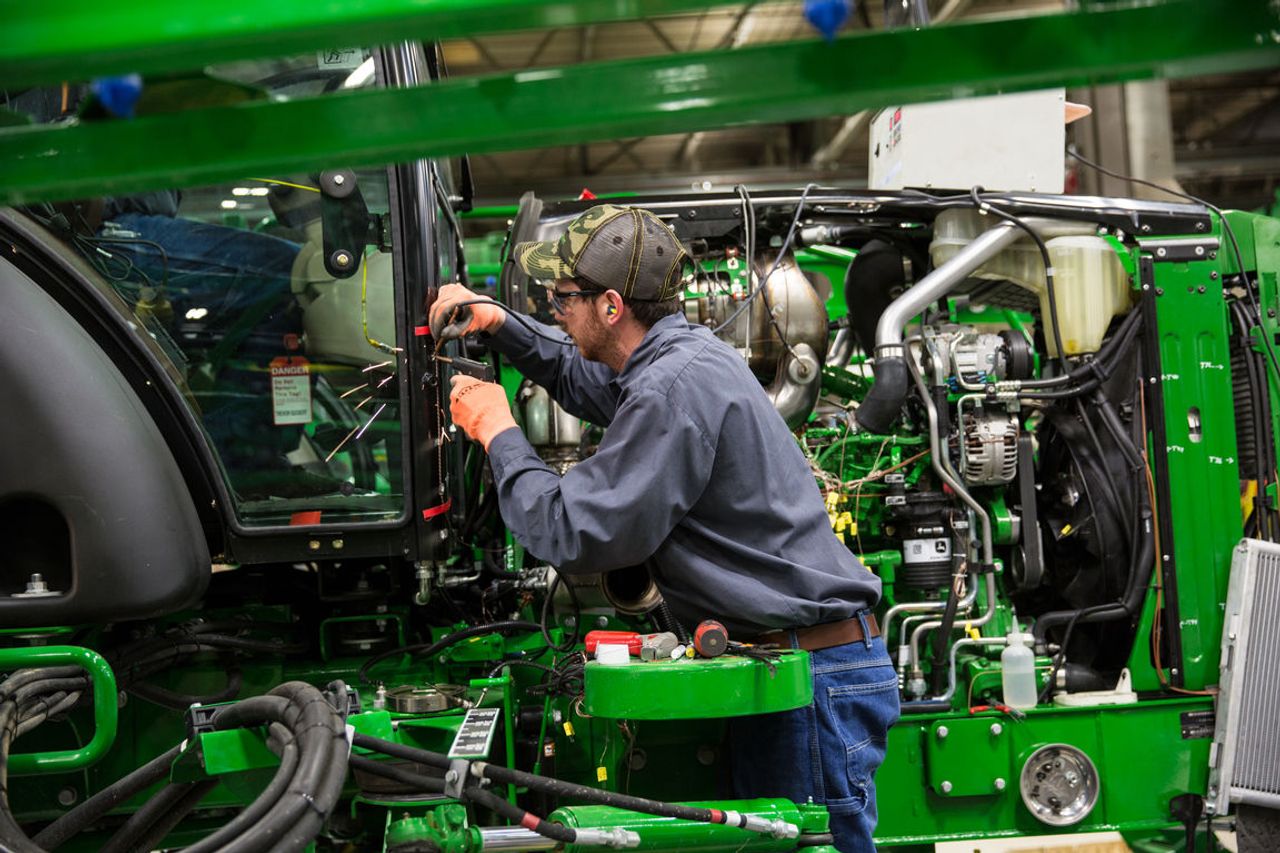
A worker inside a Deere plant (John Deere)
The
vote was a stunning rebuke to the UAW, which tried to rush through a
six-year concessions contract for 10,100 workers without giving them
sufficient time to study it. At so-called informational meetings Sunday,
workers angrily confronted union officials trying the sell the deal.
“Deere and the UAW tried to pull a fast one, but the rank and file
fought back,” a worker at the Dubuque, Iowa plant told the WSWS.
Confronting
an incipient revolt, the UAW announced it was setting a strike deadline
for 11:59 p.m. Wednesday night. Behind the scenes, however, the UAW
executives are doing everything to block a strike or isolate and defeat a
walkout if it is forced to call one.
The vote at Deere, the
first defeat of a UAW-backed agreement at the company in 35 years, is
the latest in a series of overwhelming “no” votes by workers in the US
in response to union-supported contracts:
On April 9, 1,100 Warrior Met coal miners
in central Alabama voted 1,006 to 45 (96 percent) to reject the
contract pushed by the United Mine Workers of America, which failed to
recoup the $6 wage cut the UMWA accepted in 2016.
In the late spring and early summer, 3,500 Volvo Trucks
workers in Dublin, Virginia, voted down three consecutive UAW-backed
contracts, including the first two by 90 percent or more. The UAW was
only able to shut down a five-week strike by forcing a revote on the
third rejected deal, which it claimed passed by 17 votes.
In August and early September, 3,500 auto parts workers at Dana Inc.—a
top supplier for Deere—rejected a five-year contract proposed by the
UAW and United Steelworkers by more than 90 percent, with workers at the
Toledo, Ohio, plant voting unanimously against the deal. More than a
month after the defeat of the contract, the UAW and USW are blocking a
strike that would have an immediate impact on the auto industry, keeping
workers on the job and stockpiling parts with a day-by-day contract
extension.
Twelve thousand carpenters in western Washington state
rejected four consecutive agreements pushed by the Northwest Pacific
Carpenters Union (NWCU) by margins as high as 76 percent. The NWCU was
forced to call a strike on September 16, but it kept 10,000 of the
12,000 carpenters working and ultimately pushed through a
fifth contract.
Late last week, McLaren Health nurse aides and other service workers in Flint and other mid-Michigan cities
rejected by a three-to-one margin a deal reached by the American
Federation of State, County and Municipal Employees (AFSCME) to block a
strike over dangerously high patient ratios and increased out-of-pocket
health costs.
That massive, nearly unanimous “no” votes are
now becoming the norm gives expression to an enormous anger and desire
to fight among workers. The union bureaucracy’s age-old methods of
ramming through pro-company contracts—lies about winning “substantial
gains” or “the best contract you are going to get” and the use of
threats and economic pressure to browbeat workers—are running up against
a wall of opposition.
This
is part of the emergence of the largest strike movement in the United
States in generations. The first five days of October saw the beginning
of 10 new strikes in the US, including 2,500 nurses at Mercy Hospital in
Buffalo, New York, and 1,400 Kellogg’s food-processing workers in
Michigan and other states. In addition, 60,000 Hollywood film and
television workers and 35,000 Kaiser Permanente health care workers have
voted to strike.
“Thousands of workers have gone on strike across the country, showing their growing power in a tightening economy,” Time
magazine wrote last week. “The leverage US employees have over the
people signing their paychecks was amplified in Friday’s jobs report,
which showed that employers added workers at a much slower-than-expected
pace in September,” Time wrote, adding, “and wages are
continuing to tick up across industries as employers become more
desperate to hire and retain workers.”
The Philadelphia Inquirer
pointed to a “new take-this-job-and-shove-it mentality,” noting that
“the upside-down condition of the job market has fed-up workers more
inclined to fight back and call their bosses on their threats…”
There are certain characteristics of this emerging movement that are particularly significant.
First,
the development of the class struggle is pitting workers in direct
opposition to the corporatist trade unions. The margin of the contract
rejections at Deere, Volvo, Dana and other companies expresses the real
relationship between the so-called “unions” and the working class.
These
organizations, which function as a labor police force for management
and are run by union executives with incomes in the top 5 percent of
income earners, if not higher, are completely disconnected from and
hostile to the needs and aspirations of the workers they falsely claim
to “represent.” Under conditions of explosive social anger, their
primary concern is to prove their usefulness to management and the state
by ramming through pro-company agreements one way or another.
The
Biden administration is aggressively promoting the unions as
instruments to suppress working-class resistance and divert social
opposition behind its plans for trade war and military confrontation
with China. Last week, a White House pro-union “task force” held its
second official meeting, with top military and economic cabinet
members—including Secretary of Homeland Security Alejandro Mayorkas and
Commerce Secretary Gina Raimondo—discussing final preparations of a
report on steps the administration will take to promote the expansion of
the trade unions.
The
defenders of the authority of the unions among the pseudo-left,
themselves aligned with the Biden administration and the Democratic
Party, refer to the Socialist Equality Party and the World Socialist Web Site
as “sectarian” because of our call for the formation of rank-and-file
committees. Their principal concern, however, is that the campaign led
by the WSWS for the development of independent organizations of
working-class struggle is winning a mass response.
At Deere, WSWS
articles have been read by thousands of workers, who have distributed
them at the plants and shared them on social media. Like the Dana
workers and Volvo Trucks workers before them, the WSWS has been central
in encouraging and assisting Deere workers in developing their own
independent initiative through the formation of a rank-and-file
committee.
Second, the upsurge of working-class struggles in the
US is part of an international process. This includes the strikes by
150,000 metal workers in South Africa; 90,000 healthcare workers in Sri
Lanka; healthcare, train and airport workers in Germany; and the October
1 UK parents strike “global picket line” against the spread of
COVID-19. Global corporations like Deere, which has operations in 70
countries, can only be fought by unifying the working class across all
national borders.
Third, the growth of the class struggle is
inseparably connected to the struggle against the pandemic. The ruling
class is seeking to suppress wages in the face of rising prices for
food, fuel and other necessities. At the same time, it is imposing
ever-longer hours and relentless speedup in its scramble to offset the
global supply chain crisis, as well as labor shortages driven by
millions refusing to labor in COVID-infected workplaces.
Over the
last 20 months of the pandemic, millions of lives have been sacrificed
for corporate profit, while the world’s billionaires have seen their
wealth surge by $5.5 trillion. Far from making any concessions to the
“heroes” and “essential workers” who have endured sickness and death,
the corporate and financial oligarchy is determined to exploit the
pandemic to establish a “new normal” of unrelenting exploitation. But
this is provoking a growing strike wave in the US and internationally,
under conditions in which the efforts to force workers back into unsafe
workplaces by eliminating unemployment benefits and ending eviction
moratoriums has thus far failed to produce the intended results.
On
May 1, the International Committee of the Fourth International
initiated the call for the formation of the International Workers
Alliance of Rank-and-File Committees (IWA-RFC) to organize a global
response by the working class to save lives. Now the struggle to demand
policies to eradicate the pandemic, including the closure of
nonessential workplaces and schools, is intersecting with a growing
movement against capitalist exploitation.
We call on all
workers at Deere and all sections of the working class, in the US and
internationally, to register and attend the October 24 online webinar
with leading scientists, “How to end the pandemic: The case for eradication,” co-sponsored by the WSWS and the IWA-RFC.
The United States is systematically working to provoke an escalation of tensions with China over Taiwan.
Multiple aircraft fly in formation over the USS Ronald Reagan, a U.S. Navy aircraft carrier [Credit: Kaila V. Peters/U.S. Navy]
On Wednesday, the Wall Street Journal reported that US troops have been stationed in Taiwan, which China considers part of its territory, for over one year. The Journal’s
revelations, which Chinese officials saw as being a semi-official
announcement by the US government, came amid the most dangerous standoff
between the US and China since the 1958 Taiwan Strait Crisis.
The
US Navy has been carrying out major war games near Taiwan, following
the announcement of the alliance between Australia, the UK and the US
(AUKUS), which includes providing Australia with nuclear-powered
submarines.
These developments followed the revelation in March
that the United States is in active discussions to station offensive
missiles on the “first island chain” off the Chinese mainland, including
Okinawa and Taiwan.
In 1962, when the Soviet Union stationed
missiles in Cuba, a sovereign country nearly 100 miles from Florida, the
United States declared that the USSR must either remove the missiles or
face war. Today, Washington is stationing troops, and possibly
offensive weapons, on territory claimed by China just minutes of flight
time from China’s most populous cities.
The response in China gives a sense of the potentially massive consequences of the United States’ actions. The Global Times,
which speaks for dominant sections of the Chinese political
establishment, called America’s actions tantamount to an “invasion” in
an editorial Friday.
It is clear that the Biden administration is
trying to goad China into some sort of response, provoking an incident
that can be seized on to create a de facto state of war. The US may not
want a full-scale conflict involving nuclear weapons, but war has a
logic of its own once provocation turns into an exchange of arms.
What
is behind these extraordinarily reckless actions? There are certainly
the geopolitical imperatives of American imperialism, and China has
become a central target of US war planning over the past decade. The
military considerations, however, are not the only ones dictating the
situation. A major factor is the US domestic political crisis.
Twenty
months into the global COVID-19 pandemic, the United States is a social
powder keg. More than 725,000 Americans have lost their lives to the
pandemic, or one out of 500 people. Prices are rapidly rising amid a
widespread labor shortage. Workers in industries throughout the country
are beginning to demand pay and benefits commensurate with the increased
cost of living.
These demands are coalescing into a nationwide strike movement.
Despite the efforts of the corporatist unions to suppress all
opposition in the working class, there have been strikes in recent weeks
of Kellogg’s cereal workers, nurses in New York, distillery workers in
Kentucky, and carpenters in Seattle. There is seething anger among auto
and auto parts workers, who are rejecting contract after contract
brought back to them by the unions.
Over the past year and a half,
the American ruling class, as it implemented a policy of mass death,
has handed itself trillions of dollars, inflating a massive stock market
bubble that can be sustained only through the relentless increase in
the exploitation of the working class.
Throughout history, and
particularly in the 20th century, governments have seen war as a means
of enforcing “national unity” in the face of mounting political
opposition. In 1967, historian Arno J. Mayer noted, in an article
“Domestic Causes of the First World War”:
During the
decade, including the weeks immediately preceding July-August 1914, the
European nations experienced more than routine political and social
disturbances. Even Britain, that paradigm of ordered change and
constitutionalism, was approaching the threshold of civil war.
This
growth of social tensions, Mayer noted, “inclined the governments to
push [military] preparedness and diplomatic obduracy as part of their
efforts to maintain a precarious domestic status quo.”
So, today,
under conditions of deepening social, political and economic crisis,
dominant sections of the American ruling class see a conflict with China
as a mechanism for enforcing “national unity,” which means, in
practice, suppressing and criminalizing domestic opposition.
This view is spelled out by Financial Times
columnist Janan Ganesh in a February 20201 column titled, “America’s
best hope of hanging together is China.” Ganesh concluded, “Without an
external foe to rail against, the nation turns on itself,” adding, “only
an external foe” can end the “age of discord.”
In June 2019, the
former intelligence officer and current transportation secretary Pete
Buttigieg made clear that a common external enemy would serve as the
basis for “national unity” and the “battle” at home. “The new China
challenge provides us with an opportunity to come together across the
political divide,” he said. “At least half the battle is at home.”
The
First and Second World Wars were accompanied by systematic censorship
in the United States and the imprisonment of left-wing opponents of
capitalism. In 1918, socialist Eugene Debs was sentenced to 10 years in
prison for his opposition to World War I. In 1941, 18 members of the
Trotskyist Socialist Workers Party were sentenced under the Smith Act to
between 12 and 16 months in prison.
More recently, the attacks of
September 11, 2001 were utilized to implement far-reaching attacks on
democratic rights under the framework of the “war on terror”: the
Patriot Act, Guantanamo Bay, domestic spying, and other measures aimed
at erecting the apparatus of a police state. As the WSWS noted at the time,
the ruling elite “seized on the tragic events of September 11 to
realize their political agenda at home, just as they are using them to
launch a US military intervention in oil-rich Central Asia.”
And
what has happened over the past twenty years? Social inequality has
grown to new heights. The American ruling class, in the form of the
plots of Trump, has raised the prospect of a fascistic dictatorship. The
criminality of the oligarchy, under both the Democrats and Republicans,
has led to a level of death from the pandemic that is staggering.
The
working class must be on alert. The pandemic has made clear that the
American ruling class is capable of sacrificing hundreds of thousands of
lives to achieve its goals. If the deaths of millions of people in war
is the “least bad” of several unfavorable options for the ruling class,
these deaths will be tolerated.
All over the world, workers are
entering into struggle to demand the end of decades of falling or
stagnant wages, horrendous and worsening working conditions, and an end
to the pandemic. These struggles must be connected to the fight against
imperialist war, the plots against democratic rights, and opposition to
the entire capitalist system.
Mass protests in support of the right to an abortion took place over
the weekend. An estimated 250,000 people gathered at more than 600
rallies and marches across the country on Saturday to oppose the Texas
abortion ban and the refusal of the Supreme Court to uphold Roe v. Wade.
The
scale of the protests demonstrates the broad support for abortion
rights in the United States. There were an estimated 10,000 or more at
protests in Austin and Houston, Texas, Washington D.C., Los Angeles and
New York City, while thousands more gathered in the San Francisco Bay
Area, Chicago, Boston and dozens of other large cities. There were
protests in hundreds of smaller cities and towns, ranging from college
towns to regional centers.
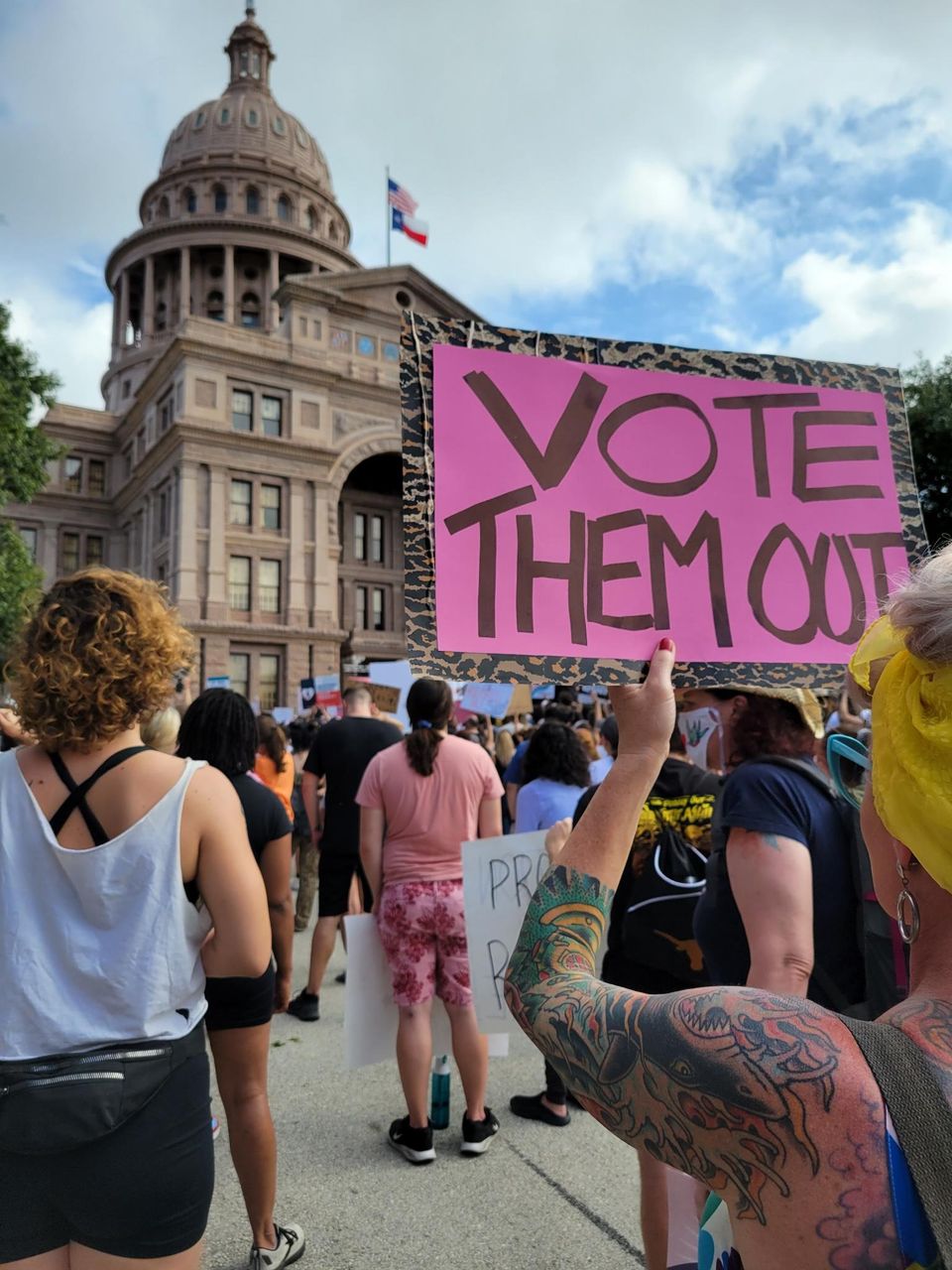
A portion of Saturday's protest at the state capitol in Austin, Texas (WSWS)
While
the overwhelming majority of those participating were women, there were
substantial numbers of men as well, gathered to voice their support for
abortion rights. College students and other young people made up a huge
proportion of those attending, but there were marchers of all ages,
from children to the elderly.
The marchers took COVID-19 more
seriously than the corporate media and political establishment. Most
were masked and many observed a six-foot social distancing, and appeals
to keep masks on and maintain distance were regularly issued by speakers
and march organizers.
Many marchers targeted the Texas state
government and Governor Greg Abbott for stinging attacks. One
hand-printed sign which hit its target denounced Abbott for combining
the abortion ban and a “let it rip” policy on the COVID-19 pandemic. The
sign read: “Texas: Where a virus has reproductive rights and a woman
doesn’t.”
There were numerous attacks (from marchers, not the
interminable pro-Democratic Party speakers) on the role of organized
religion in the attack on reproductive rights. One mocking sign,
hand-lettered in the style of a Bible verse, read: “Thou shalt not mess
with women’s reproductive rights: Fallopians 10:2.”
The spirited
nature and wide scope of the demonstrations are reflective of the broad
support for abortion rights that exists in the general population.
According to polling data gathered by Pew Research earlier this year, 59
percent of people in the United States believe abortion should be legal
in all or most cases.
Despite this popular support, the size of
the protests was considerably smaller than the millions who showed up
for the inaugural Women’s Marches in 2017, the day after Trump’s
inauguration. This must be attributed to a number of factors, including a
justifiable concern over COVID-19, and an equally justifiable
sentiment, after years of such protests, that pleading with
corporate-controlled politicians to protect democratic rights is a dead
end.
There are likely to be, as well, illusions that with the end
of the Trump administration, the threat to democratic rights, including
abortion rights, has receded. However, the Guttmacher Institute, which
carries out systematic studies on the issue, reported that more state
laws were introduced to restrict abortion rights in the six months since
Biden was inaugurated than in any previous six-month period.
The
severity of the attack in Texas, combined with the upcoming Supreme
Court hearing on a Mississippi law which could provide the vehicle for a
decision to overturn Roe v. Wade outright, might be expected
to garner a larger response. That this was not the case is the result of
the feckless politics of the Democratic Party and its supporters who
organized the rallies.
One particularly disoriented aspect of the
rallies were signs proclaiming that “men” in general, not right-wing or
bigoted men (and women), were the primary threat to abortion rights.
This presents abortion rights as a gender issue rather than a class
issue, in keeping with the Democratic Party’s advocacy of identity
politics.
But restrictions on abortion overwhelmingly impact the
working class and poor. Wealthy women will always have access to safe
abortions. Regardless of the legal status of abortion services, women
from the ruling class may simply use their wealth and power to slip past
the law and avoid the crushing penalties.
The focus on gender
ignores the reality that female governors like Kristi Noem in South
Dakota and Kay Ivey in Alabama are just as fervent in their opposition
to abortion rights as Greg Abbott in Texas.
Pew Research
demonstrates that 56 percent of men support abortion rights, compared to
62 percent of women. Much more influential than gender are factors such
as religious and political sentiments.
Many rallies were
addressed by local and state Democratic officials, along with a host of
Democratic-aligned celebrities, peddling the same electoral posturing
that has achieved nothing for abortion rights in decades.
At the
rally in Austin, Texas, was a slate of Texas Democratic Party
politicians, including US Rep. Lloyd Doggett, Texas State Senator Sarah
Eckhardt, and other local officials. They were joined by a slate of
speakers who doused themselves in identity politics, introducing
themselves as “a woman of color,” “a Latina woman,” and “an
Asian-American ally of the transgender community.”
Following the
rollout of their identity credentials, these speakers proceeded to do
little more than promote the Democratic Party and offer meaningless
displays of disapproval of the fascistic Republican Party.
One
speaker stated, “The Republicans are coming to take away your rights and
only we can stop them.” Another encouraged attendees to “blow your
whistles on three to show the GOP our voices will be heard.”
The
Democratic Party exploits mass opposition to attacks on abortion rights
to further its own electoral fortunes, but once in office, the
Democrats do nothing to defend or expand this democratic right,
accepting such atrocities as the Hyde Amendment, which bars most federal
funding for abortion services.
As recently as 2018, Democratic
House leader Nancy Pelosi denied that there was any “litmus test” on
abortion rights for Democratic Party candidates. In other words,
Democratic congressmen who are anti-choice can still expect the full
support of the party apparatus, as well as anti-choice candidates who
win a party primary.
The ruling on Roe v. Wade was issued
in 1973, nearly 50 years ago. Since then, the Democratic Party has made
no serious effort to codify abortion rights in federal law. When it has
had majorities in the House and Senate, the Democratic Party failed to
pass any federal legislation that would prevent what is occurring in
Texas today. Currently, there is more federal legislation restricting
abortion access than expanding it.
Along with the appeals to
electoral politics were frequent references to late Supreme Court
Justice Ruth Bader Ginsburg. News reports show signs and posters urging
the Supreme Court to intervene on behalf of abortion rights. A Supreme
Court with a 6-3 ultra-right majority can hardly be entrusted with the
defense of fundamental democratic rights.
The fight to protect
abortion rights must be taken out of the hands of the Democratic Party.
It has done nothing to mobilize any meaningful effort to protect
abortion rights beyond using the threat to Roe v. Wade to promote its electoral interests.
But
now there is a Democratic-controlled House, a Democratic-controlled
Senate, and a Democrat in the White House. Yet the Democratic Party has
proven incapable of passing its own voting rights bills, not just
because there is Republican opposition, but because representatives and
senators of its own party do not wish to protect democratic rights.
A
party that is abandoning the most fundamental democratic right of them
all, the right to vote, cannot be relied upon to protect the right of a
woman to get an abortion.
Working people must break with this
dead-end political orientation. The Democratic Party is offering nothing
to defend women’s rights or democratic rights in general. The only
social force capable of defending abortion rights is the working class
itself. It must not put faith in the confused, disoriented and
reactionary political conceptions promoted by the Democratic Party.
The
capitalist system is clawing back every concession made over the past
century of working class struggle. Only through the fight for socialism
can these gains, including the right to an abortion, be protected from
the right-wing politics of the two major capitalist parties.
A year after the United States bombed its pandemic performance
in front of the world, the Delta variant opened the stage for a
face-saving encore. If the U.S. had learned from its mishandling of the
original SARS-CoV-2 virus, it would have been better prepared for the
variant that was already ravaging India.
America’s
frustrating inability to learn from the recent past shouldn’t be
surprising to anyone familiar with the history of public health. Almost 20 years ago,
the historians of medicine Elizabeth Fee and Theodore Brown lamented
that the U.S. had “failed to sustain progress in any coherent manner” in
its capacity to handle infectious diseases. With every new
pathogen—cholera in the 1830s, HIV in the 1980s—Americans rediscover the
weaknesses in the country’s health system, briefly attempt to address
the problem, and then “let our interest lapse when the immediate crisis
seems to be over,” Fee and Brown wrote. The result is a Sisyphean cycle
of panic and neglect that is now spinning in its third century. Progress
is always undone; promise, always unfulfilled. Fee died in 2018, two
years before SARS-CoV-2 arose. But in documenting America’s past, she
foresaw its pandemic present—and its likely future.
More Americans have been killed by the new coronavirus than the influenza pandemic of 1918, despite a century of intervening medical advancement. The U.S. was ranked first among nations in pandemic preparedness but has among the highest death rates in the industrialized world. It invests more in medical care
than any comparable country, but its hospitals have been overwhelmed.
It helped develop COVID-19 vaccines at near-miraculous and
record-breaking speed, but its vaccination rates plateaued so quickly that it is now 38th in the world.
COVID-19 revealed that the U.S., despite many superficial strengths, is
alarmingly vulnerable to new diseases—and such diseases are inevitable.
Asthe global population grows, as the climate changes, and as humans push into spaces occupied by wild animals, future pandemics become more likely. We are not guaranteed the luxury of facing just one a century, or even one at a time.
It might seem ridiculous to think about future pandemics now, as the U.S. is consumed by debates over booster shots, reopened schools, and vaccine mandates. Prepare for the next one? Let’s get through this one first! But
America must do both together, precisely because of the cycle that Fee
and Brown bemoaned. Today’s actions are already writing the opening
chapters of the next pandemic’s history.
Internationally,
Joe Biden has made several important commitments. At the United Nations
General Assembly last week, he called for a new council of national
leaders and a new international fund, both focused on infectious
threats—forward-looking measures that experts had recommended well before COVID-19.
But
domestically, many public-health experts, historians, and legal
scholars worry that the U.S. is lapsing into neglect, that the temporary
wave of investments isn’t being channeled into the right areas, and
that COVID-19 might actually leave the U.S. weaker against
whatever emerges next. Donald Trump’s egregious mismanagement made it
easy to believe that events would have played out differently with a
halfway-competent commander who executed preexisting pandemic plans. But
that ignores the many vulnerabilities
that would have made the U.S. brittle under any administration. Even
without Trump, “we’d still have been in a whole lot of trouble,” Gregg
Gonsalves, a global-health activist and an epidemiologist at Yale, told
me. “The weaknesses were in the rootstock, not high up in the trees.”
The
panic-neglect cycle is not inevitable but demands recognition and
resistance. “A pandemic is a course correction to the trajectory of
civilization,” Alex de Waal, of Tufts University and the author of New Pandemics, Old Politics,
told me. “Historical pandemics challenged us to make some fairly
fundamental changes to the way in which society is organized.” Just as
cholera forced our cities to be rebuilt for sanitation, COVID-19 should
make us rethink the way we ventilate our buildings,
as my colleague Sarah Zhang argued. But beyond overhauling its physical
infrastructure, the U.S. must also address its deep social weaknesses—a
health-care system that millions can’t access, a public-health system
that’s been rotting for decades, and extreme inequities that leave large
swaths of society susceptible to a new virus.
Early
last year, some experts suggested to me that America’s COVID-19 failure
stemmed from its modern inexperience with infectious disease; having
now been tested, it might do better next time. But preparedness doesn’t
come automatically, and neither does its absence. “Katrina didn’t happen
because Louisiana never had a hurricane before; it happened because of
policy choices that led to catastrophe,” Gonsalves said. The arc of
history does not automatically bend toward preparedness. It must be
bent.
On September 3, the White House announced
a new strategy to prepare for future pandemics. Drafted by the Office
of Science and Technology Policy, and the National Security Council, the plan
would cost the U.S. $65 billion over the next seven to 10 years. In
return, the country would get new vaccines, medicines, and diagnostic
tests; new ways of spotting and tracking threatening pathogens; better
protective equipment and replenished stockpiles; sturdier supply chains;
and a centralized mission control that would coordinate all the above
across agencies. The plan, in rhetoric and tactics, resembles those that
were written before COVID-19 and never fully enacted. It seems to
suggest all the right things.
But
the response from the health experts I’ve talked with has been
surprisingly mixed. “It’s underwhelming,” Mike Osterholm, an
epidemiologist at the University of Minnesota, told me. “That $65
billion should have been a down payment, not the entire program. It’s a
rounding error for our federal budget, and yet our entire existence
going forward depends on this.” The pandemic plan compares itself to the
Apollo program, but the government spent four times as much, adjusted
for inflation, to put astronauts on the Moon. Meanwhile, the COVID-19 pandemic may end up costing the U.S. an estimated $16 trillion.
“I
completely agree that it will take more investment,” Eric Lander, OSTP
director and Biden’s science adviser, told me; he noted that the
published plan is just one element of a broader pandemic-preparedness
effort that is being developed. But even the $65 billion that the plan
has called for might not fully materialize. Biden originally wanted to ask Congress to immediately invest $30 billion but eventually called for just half that amount, in a compromise with moderate Democrats who sought to slash it even further. The idea of shortchanging pandemic preparedness after the events of 2020 “should be unthinkable,” wrote former CDC Director Tom Frieden and former Senator Tom Daschle in The Hill. But it is already happening.
Others
worry about the way the budget is being distributed. About $24 billion
has been earmarked for technologies that can create vaccines against a
new virus within 100 days. Another $12 billion will go toward new
antiviral drugs, and $5 billion toward diagnostic tests. These goals
are, individually, sensible enough. But devoting two-thirds of the full
budget toward them suggests that COVID-19’s lessons haven’t been
learned.
America failed to test sufficiently throughout the pandemic even though rigorous tests have long been available. Antiviral drugs
played a bit part because they typically provide incremental benefits
over basic medical care, and can be overly expensive even when they
work. And vaccines were already produced far faster than experts had
estimated and were more effective than they had hoped; accelerating that
process won’t help if people can’t or won’t get vaccinated, and
especially if they equate faster development with nefarious
corner-cutting, as many Americans did this year. Every adult in the U.S.
has been eligible for vaccines since mid-April; in that time, more Americans have died of COVID-19 per capita than people in Germany, Canada, Rwanda, Vietnam, or more than 130 other countries did in the pre-vaccine era.
“We’re
so focused on these high-tech solutions because they appear to be what a
high-income country would do,” Alexandra Phelan, an expert on
international law and global health policy at Georgetown University,
told me. And indeed, the Biden administration has gone all in on
vaccines, trading them off against other countermeasures, such as masks
and testing, and blaming “the unvaccinated”
for America’s ongoing pandemic predicament. The promise of biomedical
panaceas is deeply ingrained in the U.S. psyche, but COVID should have
shown that medical magic bullets lose their power when deployed in a
profoundly unequal society. There are other ways of thinking about
preparedness. And there are reasons those ways were lost.
In 1849, after investigating a devastating outbreak of typhus in what is now Poland, the physician Rudolf Virchow wrote,
“The answer to the question as to how to prevent outbreaks … is quite
simple: education, together with its daughters, freedom and welfare.”
Virchow was one of many 19th-century thinkers who correctly understood
that epidemics were tied to poverty, overcrowding, squalor, and
hazardous working conditions—conditions that inattentive civil servants
and aristocrats had done nothing to address. These social problems
influenced which communities got sick and which stayed healthy. Diseases
exploit society’s cracks, and so “medicine is a social science,”
Virchow famously said. Similar insights dawned across the Atlantic,
where American physicians and politicians tackled the problem of urban
cholera by fixing poor sanitation and dilapidated housing. But as the
19th century gave way to the 20th, this social understanding of disease
was ousted by a new paradigm.
When scientists realized that infectious diseases are caused by microscopic organisms, they gained convenient villains. Germ theory’s pioneers, such as Robert Koch,
put forward “an extraordinarily powerful vision of the pathogen as an
entity that could be vanquished,” Alex de Waal, of Tufts, told me. And
that vision, created at a time when European powers were carving up
other parts of the world, was cloaked in metaphors of imperialism, technocracy, and war.
Microbes were enemies that could be conquered through the technological
subjugation of nature. “The implication was that if we have just the
right weapons, then just as an individual can recover from an illness
and be the same again, so too can a society,” de Waal said. “We didn’t
have to pay attention to the pesky details of the social world, or see
ourselves as part of a continuum that includes the other life-forms or
the natural environment.”
Germ
theory allowed people to collapse everything about disease into battles
between pathogens and patients. Social matters such as inequality,
housing, education, race, culture, psychology, and politics became
irrelevancies. Ignoring them was noble; it made medicine and science
more apolitical and objective. Ignoring them was also easier; instead of
staring into the abyss of society’s intractable ills, physicians could
simply stare at a bug under a microscope and devise ways of killing it.
Somehow, they even convinced themselves that improved health would
“ultimately reduce poverty and other social inequities,” wrote Allan Brandt and Martha Gardner in 2000.
This
worldview accelerated a growing rift between the fields of medicine
(which cares for sick individuals) and public health (which prevents
sickness in communities). In the 19th century, these disciplines were
overlapping and complementary. In the 20th, they split into distinct
professions, served by different academic schools. Medicine, in
particular, became concentrated in hospitals, separating physicians from
their surrounding communities and further disconnecting them from the
social causes of disease. It also tied them to a profit-driven system
that saw the preventive work of public health as a financial threat.
“Some suggested that if prevention could eliminate all disease, there
would be no need for medicine in the future,” Brandt and Gardner wrote.
This
was a political conflict as much as an ideological one. In the 1920s,
the medical establishment flexed its growing power by lobbying the
Republican-controlled Congress and White House to erode public-health
services including school-based nursing, outpatient dispensaries, and
centers that provided pre- and postnatal care to mothers and infants.
Such services were examples of “socialized medicine,” unnecessary to
those who were convinced that diseases could best be addressed by
individual doctors treating individual patients.Health care
receded from communities and became entrenched in hospitals. Decades
later, these changes influenced America’s response to COVID-19. Both the
Trump and Biden administrations have described the pandemic in military
metaphors. Politicians, physicians, and the public still prioritize
biomedical solutions over social ones. Medicine still overpowers public
health, which never recovered from being “relegated to a secondary
status: less prestigious than clinical medicine [and] less amply
financed,” wrote the sociologist Paul Starr. It stayed that way for a century.
During the pandemic,
many of the public-health experts who appeared in news reports hailed
from wealthy coastal universities, creating a perception of the field as
well funded and elite. That perception is false. In the early 1930s,
the U.S. was spending just 3.3 cents of every medical dollar on public
health, and much of the rest on hospitals, medicines, and private health
care. And despite a 90-year span that saw the creation of the CDC, the
rise and fall of polio, the emergence of HIV, and relentless calls for
more funding, that figure recently stood at … 2.5 cents.
Every attempt to boost it eventually receded, and every investment saw
an equal and opposite disinvestment. A preparedness fund that was
created in 2002 has lost half its budget, accounting for inflation. Zika money was cannibalized from Ebola money.
America’s historical modus operandi has been to “give responsibility to
the local public-health department but no power, money, or
infrastructure to make change,” Ruqaiijah Yearby, a health-law expert at
Saint Louis University, told me.
Lisa
Macon Harrison, who directs the department that serves Granville and
Vance Counties, in North Carolina, told me that to protect her community
of 100,000 people from infectious diseases—HIV, sexually transmitted
infections, rabies, and more—the state gives her $4,147 a year. That’s
90 times less than what she actually needs. She raises the shortfall
herself through grants and local dollars.
Trifling
budgets mean smaller staff, which turns mandatory services into
optional ones. Public-health workers have to cope with not just
infectious diseases but air and water pollution, food safety, maternal
and child health, the opioid crisis, and tobacco control. But with local
departments having lost 55,000 jobs since the 2008 recession, many had
to pause their usual duties to deal with COVID-19. Even then, they
didn’t have staff to do the most basic version of contact
tracing—calling people up—let alone the ideal form, wherein community
health workers help exposed people find food, services, and places to
isolate. When vaccines were authorized, departments had to scale back on
testing so that overworked staff could focus on getting shots into
arms; even that wasn’t enough, and half of states hired armies of consultants to manage the campaign, TheWashington Post reported.
In May, the Biden administration said that it would invest $7.4 billion in recruiting and training public-health workers,
creating tens of thousands of jobs. But those new workers would be
air-dropped into an infrastructure that is quite literally crumbling.
Many public-health departments are housed in buildings that were erected
in the 1940s and ’50s, when polio money was abundant; they are now
falling apart. “There’s a trash can in the hallway in front of my
environmental-health supervisor’s office to catch rain that might come
through the ceiling,” Harrison told me. And between their reliance on fax machines and decades-old data systems, “it feels like we’re using a Rubik’s Cube and an abacus to do pandemic response,” Harrison added.
Last year, America’s data systems proved to be utterly inadequate for tracking a rapidly spreading virus. Volunteer efforts such as the COVID Tracking Project (launched by The Atlantic) had to fill in for the CDC. Academics created a wide range of models, some of which were misleadingly inaccurate.
“For hurricanes, we don’t ask well-intentioned academics to stop their
day jobs and tell us where landfall will happen,” the CDC’s Dylan George
told me. “We turn to the National Hurricane Center.” Similarly, George
hopes that policy makers can eventually turn to the CDC’s newly launched
Center for Forecasting and Outbreak Analytics, where he is director of
operations. With initial funding of about $200 million, the center aims
to accurately track and predict the paths of pathogens, communicate those predictions with nuance, and help leaders make informed decisions quickly.
But
public health’s long-standing neglect means that simply making the
system fit for purpose is a mammoth undertaking that can’t be
accomplished with emergency funds—especially not when those funds go
primarily toward biomedical countermeasures. That’s “a welfare scheme
for university scientists and big organizations, andit’s not
going to trickle down to the West Virginia Department of Health,” Gregg
Gonsalves, the health activist and epidemiologist, told me. What the
U.S. needs, asseveralreports have recommended and as some senators have proposed, is a stable and protected stream of money that can’t be diverted to the emergency of the day.
That would allow health departments to properly rebuild without
constantly fearing the wrecking ball of complacency. Biden’s $7.4
billion bolus is a welcome start—but just a start. And though his new
pandemic-preparedness plan commits $6.5 billion toward strengthening the
U.S. public-health system over the next decade, it might take $4.5 billion a year to actually do the job.
“Nobody
should read that plan as the limit of what needs to be done,” Eric
Lander, the president’s science adviser, told me. “I have no
disagreement that a major effort and very substantial funding are
needed,” and, he noted, the administration’s science and technology advisers
will be developing a more comprehensive strategy. “But is pandemic
preparedness the lens through which to fix public health?” Lander asked.
“I think those issues are bigger—they’re everyday problems, and we need
to shine a spotlight on them every day.”
But
here is public health’s bind: Though it is so fundamental that it can’t
(and arguably shouldn’t) be tied to any one type of emergency,
emergencies are also the one force that can provide enough urgency to
strengthen a system that, under normal circumstances, is allowed to rot.
When a doctor saves a patient, that person is grateful.When an epidemiologist prevents someone from catching a virus, that person never knows.Public
health “is invisible if successful, which can make it a target for
policy makers,” Ruqaiijah Yearby, the health-law expert, told me. And
during this pandemic, the target has widened, as overworked and under-resourced officials face aggressive protests.
“Our workforce is doing 15-hour days and rather than being glorified,
they’re being vilified and threatened with bodily harm and death,”
Harrison told me. According to an ongoing investigation by the Associated Press and Kaiser Health News, the U.S. has lost at least 303 state or local public-health leaders since April 2020, many because of burnout and harassment.
Even though 62 percent of Americans believe that pandemic-related restrictions were worth the cost, Republican legislators
in 26 states have passed laws that curtail the possibility of
quarantines and mask mandates, as Lauren Weber and Anna Maria
Barry-Jester of KHN have reported. Supporters characterize these
laws as checks on executive power, but several do the opposite, allowing
states to block local officials or schools from making decisions to
protect their communities. Come the next pandemic (or the next variant),
“there’s a real risk that we are going into the worst of all worlds,”
Alex Phelan, of Georgetown University, told me. “We’re removing
emergency actions without the preventive care that would allow people to
protect their own health.” This would be dangerous for any community,
let alone those in the U.S. that are structurally vulnerable to
infectious disease in ways that are still being ignored.
Biden’s new pandemic plan
contains another telling detail about how the U.S. thinks about
preparedness. The parts about vaccines and therapeutics contain several
detailed and explicit strategies. The part about vulnerable communities
is a single bullet point that calls for strategies to be developed.
This isn’t a new bias. In 2008, Philip Blumenshine and his colleagues argued that America’s flu-pandemic plans overlooked the disproportionate toll that such a disaster would take onsocially
disadvantaged people. Low-income and minority groups would be more
exposed to airborne viruses because they’re more likely to live in
crowded housing, use public transportation, and hold low-wage jobs that
don’t allow them to work from home or take time off when sick. When
exposed, they’d be more susceptible to disease because their baseline
health is poorer, and they’re less likely to be vaccinated. With less
access to health insurance or primary care, they’d die in greater
numbers. These predictions all came to pass during the H1N1 swine-flu pandemic of 2009.
When SARS-CoV-2 arrived a decade later, history repeated itself.
The new coronavirus disproportionately infected essential workers, who
were forced to risk exposure for the sake of their livelihood;
disproportionately killed Pacific Islander, Latino, Indigenous, and Black Americans;
and struck people who’d been packed into settings at society’s
margins—prisons, nursing homes, meatpacking facilities. “We’ve built a
system in which many people are living on the edge, and pandemics prey
on those vulnerabilities,” Julia Raifman, a health-policy researcher at
Boston University, told me.
Such
patterns are not inevitable. “It is very clear, from evidence and
history, that robust public-health systems rely on provision of social
services,” Eric Reinhart, a political anthropologist and physician at
Northwestern University, told me. “That should just be a political
given, and it is not. You have Democrats who don’t even say this, let
alone Republicans.” America’s ethos of rugged individualism pushes
people across the political spectrum to see social vulnerability as a
personal failure rather than the consequence of centuries of racist and
classist policy, and as a problem for each person to solve on their own
rather than a societal responsibility. And America’s biomedical bias
fosters the seductive belief that these sorts of social inequities won’t
matter if a vaccine can be made quickly enough.
But inequity reduction is not aside quest of pandemic preparedness. It is arguably the central pillar—if not for moral reasons, then for basic epidemiological ones. Infectious diseases can spread, from the vulnerable to the privileged. “Our inequality makes me
vulnerable,” Mary Bassett, who studies health equity at Harvard, told
me. “And that’s not a necessary feature of our lives. It can be
changed.”
“To be ready for
the next pandemic, we need to make sure that there’s an even footing in
our societal structures,” Seema Mohapatra, a health-law expert at
Southern Methodist University, in Dallas, told me. That vision of
preparedness is closer to what 19th-century thinkers lobbied for, and
what the 20th century swept aside. It means shifting the spotlight away
from pathogens themselves and onto the living and working conditions
that allow pathogens to flourish. It means measuring preparedness not
just in terms of syringes, sequencers, and supply chains but also in
terms of paid sick leave, safe public housing, eviction moratoriums, decarceration, food assistance, and universal health care.It
means accompanying mandates for social distancing and the like with
financial assistance for those who might lose work, or free
accommodation where exposed people can quarantine from their family. It
means rebuilding the health policies that Ronald Reagan began shredding
in the 1980s and that later administrations further frayed. It means
restoring trust in government and community through public services.
“It’s very hard to achieve effective containment when the people you’re
working with don’t think you care about them,” Arrianna Marie Planey, a
medical geographer at the University of North Carolina at Chapel Hill,
told me.
In
this light, the American Rescue Plan—the $1.9 trillion
economic-stimulus bill that Biden signed in March—is secretly a
pandemic-preparedness bill. Beyond specifically funding public health, it also includes unemployment insurance, food-stamp benefits, child tax credits, and other policies that are projected to cut the poverty rate for 2021 by a third,
and by even more for Black and Hispanic people. These measures aren’t
billed as ways of steeling America against future pandemics—but they
are. Also on the horizon is a set of recommendations from the COVID-19
Health Equity Task Force, which Biden established on his first full day
of office. “The president has told many of us privately, and said
publicly, that equity has to be at the heart of what we do in this
pandemic,” Vivek Murthy, the surgeon general, told me.
Some of the American Rescue Plan’s measures are temporary, and their future depends on the $3.5 trillion social-policy bill
that Democrats are now struggling to pass, drawing opposition from
within their own party. “Health equity requires multiple generations of
work, and politicians want outcomes that can be achieved in time to be
recognized by an electorate,” Planey told me. That electorate is tiring
of the pandemic, and of the lessons it revealed.
Last
year, “for a moment, we were able to see the invisible infrastructure
of society,” Sarah Willen, an anthropologist at the University of
Connecticut who studies Americans’ conceptions of health equity, told
me. “But that seismic effect has passed.” Socially privileged people now
also enjoy the privilege of immunity, while those with low incomes,
food insecurity, eviction risk, and jobs in grocery stores and
agricultural settings are disproportionately likely to be unvaccinated.
Once, they were deemed “essential”; now they’re treated as obstinate
annoyances who stand between vaccinated America and a normal life.
The
pull of the normal is strong, and our metaphors accentuate it. We
describe the pandemic’s course in terms of “waves,” which crest and then
collapse to baseline. We bill COVID-19 as a “crisis”—a word that evokes
decisive moments and turning points, “and that, whether you want to or
not, indexes itself against normality,”
Reinhart told me. “The idea that something new can be born out of it is
lost,” because people long to claw their way back to a precrisis state,
forgetting that the crisis was itself born of those conditions.
Better
ideas might come from communities for whom “normal” was something to
survive, not revert to. Many Puerto Ricans, for example, face multiple
daily crises including violence, poverty, power outages, and storms,
Mónica Feliú-Mójer, of the nonprofit Ciencia Puerto Rico, told me.
“They’re always preparing,” she said, “and they’ve built support
networks and mutual-aid systems to take care of each other.” Over the
past year, Ciencia PR has given small grants to local leaders
to fortify their communities against COVID-19. While some set up
testing and vaccination clinics, others organized food deliveries or
educational events. One cleaned up a dilapidated children’s park to
create a low-risk outdoor space where people could safely reconnect.
Such efforts recognize that resisting pandemics is about solidarity as
well as science, Feliú-Mójer told me.
The
panic-neglect cycle is not irresistible. Some of the people I spoke
with expressed hope that the U.S. can defy it, just not through the
obvious means of temporarily increased biomedical funding. Instead, they
placed their faith in grassroots activists who are pushing for fair
labor policies, better housing, health-care access, and other issues of
social equity. Such people would probably never think of their work as a
way of buffering against a pandemic, but it very much is—and against
other health problems, natural disasters, and climate change besides.
These threats are varied, but they all wreak their effects on the same
society. And that society can be as susceptible as it allows itself to
be.
The nearly week-long strike by thousands of carpenters in Washington
state, centered in the Seattle metro area, has reached a critical
juncture. Outraged by the deliberate sabotage of the strike by the
United Brotherhood of Carpenters union (UBC), which has kept most
carpenters on the job since the walkout began on September 16,
rank-and-file workers are seeking to expand the strike to win their
demands for pay raises and a reversal of decades of UBC-backed
concessions.
After seeing their livelihoods eroded by rising
housing and other living expenses and working during a pandemic that has
taken a deadly toll on construction workers, carpenters are taking a
stand for all building trades workers and the entire working class. But
decades of bitter experience and defeated strikes, beginning with the
AFL-CIO’s betrayal of the 1981 PATCO air traffic controllers’ strike 40
years ago, proves that militancy and solidarity alone is not enough to
defeat the enemies arrayed against the working class.
To take
forward this struggle carpenters need the clearest picture of the
political forces they confront, new fighting organizations
democratically controlled by the rank-and-file, and a strategy to
mobilize the broadest sections of the working class to support their
fight.
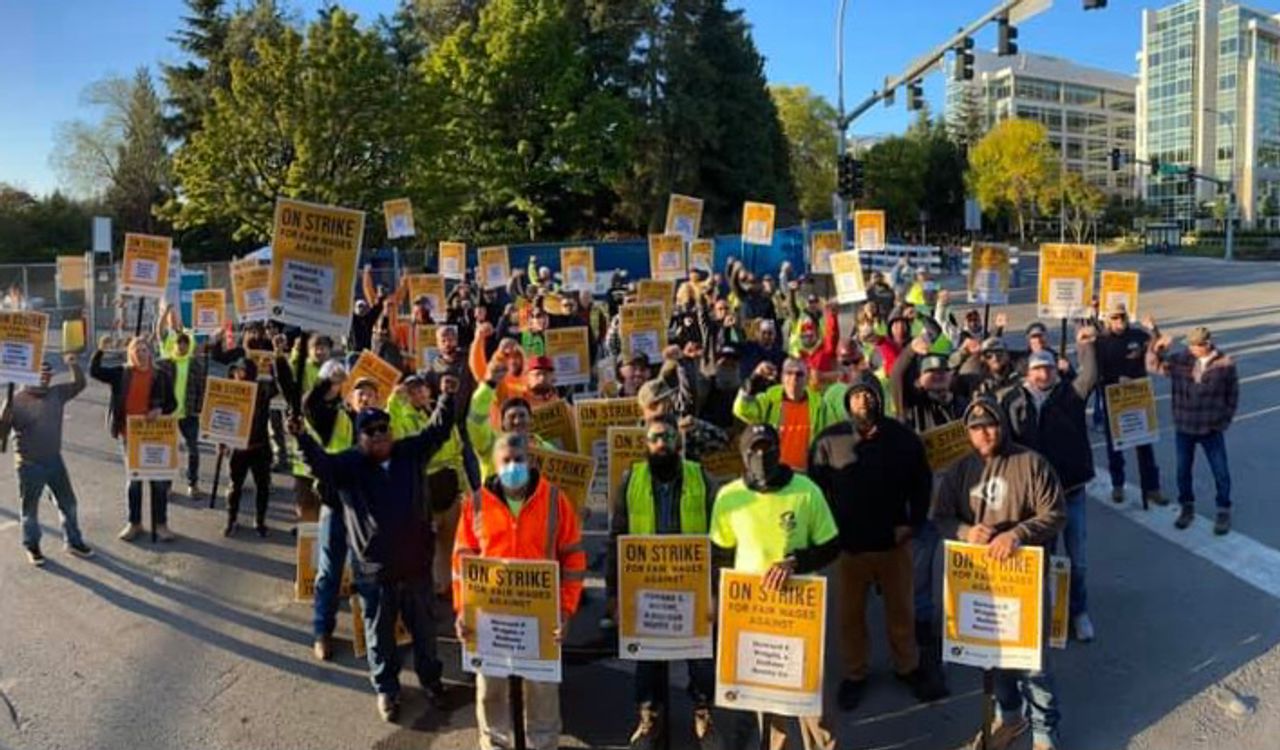
Striking Seattle carpenters (Source: The Peter J. McGuire Group)
Carpenters
know they are fighting the Associated General Contractors of Washington
(AGC), which is made up of some of the largest and most profitable
construction firms in the US, including Turner, Kiewit and Skanska.
Along with the AGC are Amazon, Microsoft and other corporations that
want their projects completed as quickly and cheaply as possible. Bezos,
Gates and other billionaires, who have seen their fortunes rise while
nearly 700,000 people have died, fear nothing more than a revolt by the
working class against social inequality and the grotesque concentration
of wealth.
Behind these corporate giants stand Governor Jay Inslee
and both corporate-controlled parties, which have handed trillions in
tax cuts and bailouts to big business while cutting unemployment
benefits to jobless workers. Seattle Mayor Jenny Durkan and the City
Council are not “neutral,” much less supportive of the striking
carpenters. They fear the revolt of the carpenters will encourage other
sections of the working class to fight, and that is why union leaders
are in meetings right now trying to figure out how to crush the strike.
This
nexus of the collaboration between big business, the Democrats and
Republicans, and the union executives can be seen most clearly in the
Project Labor Agreements (PLA), which have been used to destroy the
achievements won by construction workers over generations of struggle.
While
forced to sanction the walkout, UBC officials never wanted a strike and
are actively working to sabotage and defeat it. Pacific Northwest
Carpenters Union Executive-Treasurer Evelyn Shapiro and the national
leadership are forcing 10,000 of the 12,000 area carpenters to stay on
the job under the no-strike agreements contained in the PLAs and are
limiting strikers to ineffective picketing of empty job sites.
UBC
and Kings County Labor Council officials have launched a vicious
red-baiting campaign against rank-and-file workers and the social media
platforms, including The Peter J. McGuire Group, to organize opposition.
UBC officials have threatened militant workers with expulsion from the
union, the loss of their jobs and legal and financial retribution for
“unauthorized” picketing and exercising their rights to free speech.
There is only one description for these bureaucrats: they are scabs and company stooges.
Workers
do not need “permission” from Shapiro (salary $259,038), General
President Douglas McCarron (2020 salary $519,000) and other UBC
executives to fight for their jobs and livelihoods. Like their
counterparts in the other building trades unions, they have spent
decades selling out workers. Their chief obsession is “market share,” by
which they mean securing the continued flow of dues income and pension
contributions into their bank accounts and investment vehicles. To
secure this, they must repeatedly prove to the powers-that-be that they
can keep workers in a state of industrial servitude.
The revolt of
the carpenters is part of a growing wave of struggles in the US and
internationally, which is taking the form of a direct struggle against
the pro-company unions. This started with the wave of wildcat strikes by
teachers in West Virginia, Oklahoma and Arizona in 2018 and the revolt
of the maquiladora workers in Matamoros, Mexico in 2019. In the last
year alone, Warrior Met Coal miners in Alabama voted down a United Mine
Workers-backed contract 1,006 to 45; Volvo Trucks workers in Virginia
voted down three United Auto Workers-backed contracts; Frito-Lay and
Nabisco workers have rejected pro-company agreements pushed by the
Bakery, Confectionery, Tobacco Workers and Grain Millers International
Union (BCTGM); and Dana auto parts workers voted down a deal by the
United Auto Workers by 90 percent.
To the extent, however, that
workers have not been able to organize independently of the corporatist
unions and expand their struggles, in each case the union bureaucrats
were able to regain control, isolate and wear down workers and impose
the dictates of the employers.
The
phrase “We are the union” is often used to encourage the illusion that
workers can take the unions back from the bureaucrats and reform them.
But the unions as organizations were long ago transformed into tools of
corporate management and the government. The source of this was not only
the corruption and cowardice of the leaders but the very nature of the
pro-capitalist and nationalist unions. Incapable of responding in any
progressive way to the globalization of capitalist production, the
continued existence of these organizations depended on them becoming the
enforcers of the ever-greater exploitation of the working class to
“compete” internationally.
Seattle City Councilwoman Kshama Sawant, Socialist Alternative and publications like Labor Notes
claim the unions can be forced to fight if workers exert enough
pressure on them. But bitter experience has shown the more workers fight
for what they need, the more the unions and politicians crack down to
defend the corporate and financial elite. Every attempt to reform the
trade unions, from the Teamsters for a Democratic Union to New
Directions in the UAW, has ended in failure for the working class, with
the various “union reformers” incorporated into the labor bureaucracy.
New
organizations of struggle, independent of the corporatist unions and
the two big business parties are needed. Rank-and-file committees will
share information, ensure democratic discussion outside of the control
of the union bureaucracy, and coordinate common action.
Time
cannot be wasted through fruitless appeals to the corrupt leaders of
other unions, much less Inslee and the Seattle City Council, who all
defend the profit interests of the corporations, businesses and
investors. Instead, carpenters should organize demonstrations, rallies
and mass meetings to appeal to the working class throughout the area to
win their struggle. This means mobilizing teachers fighting the criminal
reopening of the schools, overworked health care workers in inundated
hospitals, and the millions of other workers who want to fight poverty
wages and grueling work conditions. The powerful traditions of the 1919
Seattle General Strike should be revived and common action prepared to
defend the carpenters against any threats of state intervention.
The World Socialist Web Site,
which assisted workers in forming independent rank-and-file committees
at Volvo Trucks, Dana and other workplaces is prepared to assist
carpenters to form their own committees to unite workers across all
trades and geographic regions, develop genuine workers democracy, and
carry out an offensive to demand what workers need, not what the
companies and unions deem acceptable.
We urge workers who want to share their voices and get involved with this fight to contact us at comments@wsws.org .